Ritual Without Theater
Finding genuine spirituality in ordinary life instead of ritual performance.
One of the strange side effects of modern Paganism is that many of us have unconsciously absorbed the idea that spirituality must "look spiritual" in order to be real.
Candles must flicker correctly. Altars must look impressive. Ritual tools must carry symbolism that can be explained in long discussions online. There is often an unspoken pressure to make spirituality visible, aesthetic, and performative. Even people who reject that tendency intellectually can still feel it emotionally.
I think this creates a quiet kind of alienation.
A person may feel deeply connected to the Gods, the seasons, or the rhythm of life itself, yet still wonder if what they are doing “counts” because it does not resemble the polished image of Pagan practice they have absorbed from books, festivals, social media, or community expectations. Someone standing in a cluttered apartment muttering a quick prayer over morning coffee may feel less legitimate than someone in ceremonial robes standing before a carved altar. Yet I suspect the Gods, if they care about such things at all, are far more interested in sincerity than presentation.
The older I get, the more suspicious I become of spirituality that requires an audience.
There is absolutely nothing wrong with beautiful ritual. I love incense smoke curling through dim light. I love old ritual tools worn smooth from use. I love chanting, candles, symbols, and all the theatrical elements that can pull the mind into sacred space. Ritual theater has power. Human beings are symbolic creatures, and symbolism speaks to parts of us that logic cannot fully reach.
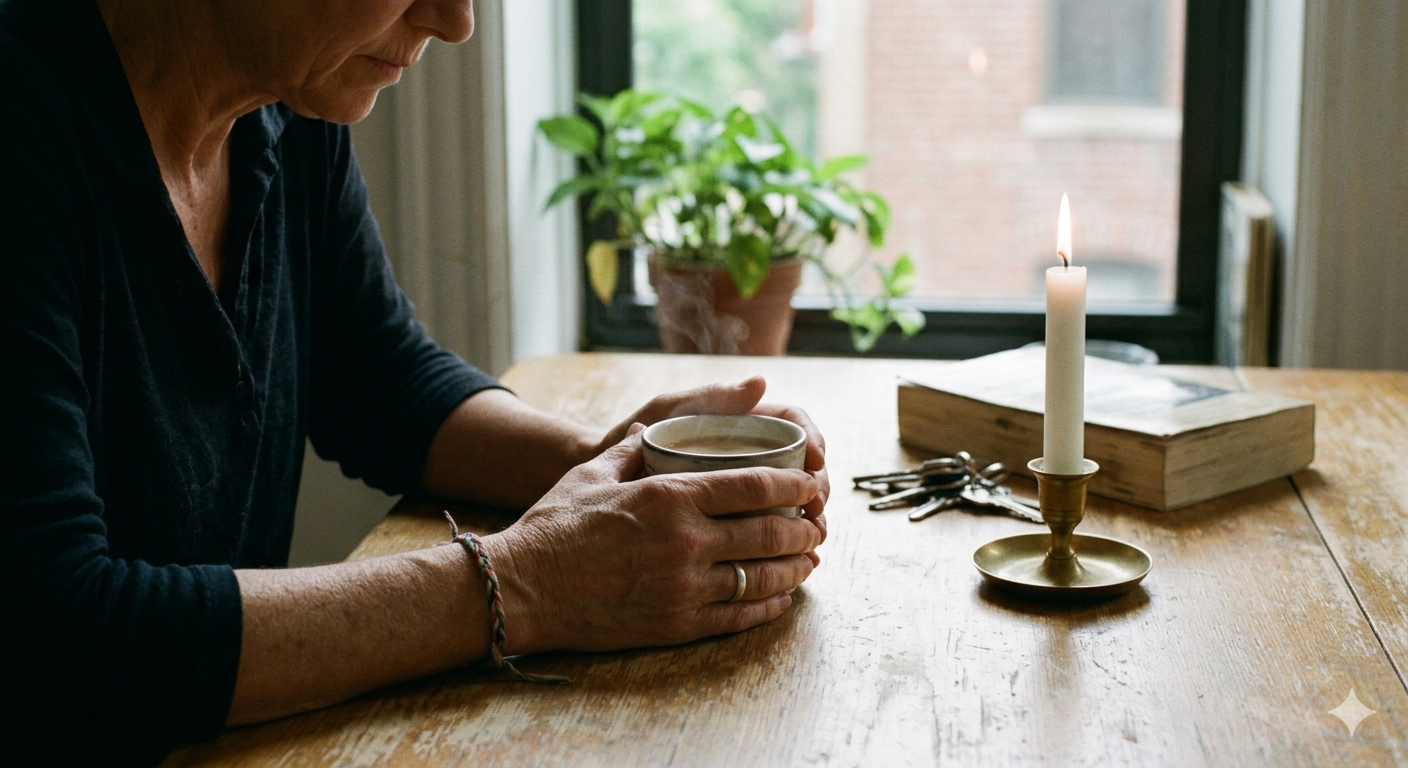
But theater is not the same thing as authenticity. Some of the most spiritually genuine moments of my life would have looked profoundly unimpressive to an outside observer: A silent drive home after receiving bad news; standing outside in cold air at two in the morning because I needed to feel the night around me; lighting a candle in an old single-wide trailer after a brutal day and simply sitting still for ten minutes; whispering a prayer while washing my hands before bed. None of these moments would make compelling photographs for a Pagan magazine. None would look especially mystical to anyone watching. Yet they carried more spiritual reality than some of the elaborate rituals I have participated in over the years.
I sometimes think modern Pagans accidentally inherit the worst habits of both consumer culture and organized religion at the same time. Consumer culture tells us we need more objects in order to become complete. Organized religion often tells us spirituality requires formal correctness. Mix the two together and you end up with people who feel vaguely guilty because their altar is too small, their ritual tools are too cheap, or their practice does not resemble a ceremonial painting from a Llewellyn cover.
Meanwhile, actual spiritual life continues happening quietly in the background.
Most religion throughout human history was not performed in dedicated temples by people dressed for ceremony. It happened while cooking, farming, traveling, cleaning, grieving, and surviving. Spirituality was woven into ordinary existence because ordinary existence was understood to matter.
Modern people often separate spirituality from daily life so completely that we accidentally turn it into a hobby. We “do spirituality” during designated times and then return to “real life” afterward, as if the sacred only exists during intentional ritual.
I do not think our ancestors experienced the world that way.
I suspect many of them understood instinctively that ritual was never meant to replace life. Ritual existed to sharpen awareness of life.
That distinction matters.
An altar should not become a place where we temporarily escape reality. It should become a place that trains us to notice reality more clearly.
A prayer should not merely separate us from the world. It should reconnect us to it.
Even meditation, at its best, is not about withdrawal from existence. It is about becoming fully present within it.
This is one reason I have increasingly come to value small rituals that integrate naturally into ordinary routines. A brief pause before leaving the house. A moment of silence before eating. Touching an altar in passing, not because a formal rite is required, but simply to reorient attention for a second. These things are sustainable. More importantly, they gradually dissolve the artificial border between “spiritual practice” and “life.”
I think many Pagans secretly hunger for exactly that. Not endless ceremonies. Not constant mystical experiences. Not aesthetic perfection. What many people actually want is permission to experience ordinary life as spiritually meaningful again.
We live in a culture that monetizes distraction and rewards fragmentation. Attention itself has become fractured. We move rapidly from screen to screen, thought to thought, task to task, often without ever fully inhabiting the moment we are currently living. Under those conditions, even five minutes of genuine presence can become sacred. And perhaps that is the real heart of ritual. Not performance. Not complexity. Not spiritual cosplay. Presence.
Everything else is ultimately secondary.
Have Wisdom to Share?
Interested in submitting an article to the Codex? We'd love to read it.
Contact Sickle at sickle@pagancodex.com to discuss your submission.